
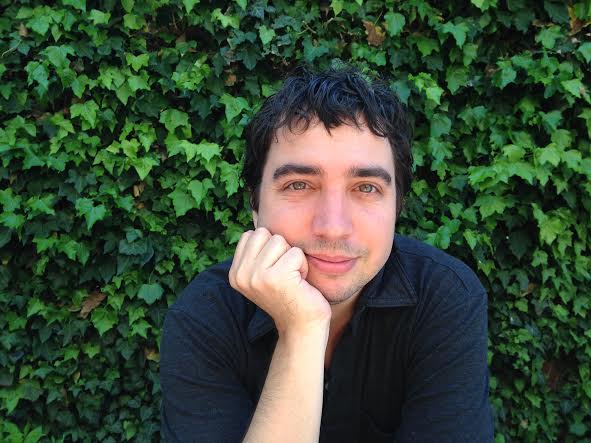
Kenan Rubenstein is a comics and web design artist and also the creator of Decision Bot and Homebase, among other projects. In fact, Kenan is running at least a thousand different projects at all times, so we got together with him to learn where he draws all his energy and inspiration from!
When did your interest in comics start?
When I was nine, I would sell subscriptions to my mom and dad’s co-workers. I photocopied them and stapled them, and once every month I’d give everyone a comic. Each one was a hodgepodge of different stuff that I consumed at that time - there were comics based on nintendo games and comics based on the Mets because I loved baseball. There were a lot of me and my friends with superpowers - it is really hard to tell what we were doing... I guess at the time I knew, but it looks like we were blasting things with our arms.
How did this initial interest translate into sustained love?
In college, I was a film major and did animation. I was really passionate about telling stories. I rediscovered comics because you can tell a story by yourself, with no funding, with a pen and a piece of paper, and have the creative freedom to make it as personal as you want without worrying about whether anybody is going to buy it or read it.
What is this whole stop motion animation thing?
You make tiny models, you move them a tiny smidge, and you take a picture, you move them a tiny smidge, and you take another picture. And you take 24 pictures for every second of footage you get. One of my first big cartoons was seven and a half minutes long and it took me a few months of literally not leaving my dorm room.
It’s the same as filming - when you shoot a movie, the camera shoots 24 still frames per second and plays them back to you. You do the same thing when you are making animation - instead of filming something that is moving and breaking it up into still frames and replaying it as if it is moving again, you take things that were never moving in the first place and make them look like they are.
The thing is at that age, and maybe still at this age, you are so full of ideas, you don’t really think, “How long is this actually going to take to do?” And thank god because, honestly, I’d never do anything if I knew going into it how long it was going to take me to do.
 The thing is at that age, and maybe still at this age, you are so full of ideas, you don’t really think, “How long is this actually going to take to do?” And thank god because, honestly, I’d never do anything if I knew going into it how long it was going to take me to do.
My first set I made on a lazy Susan and I built the whole set on top of that, so instead of having to move the camera, I moved the table and did rotating shots. For my second movie, I decided I needed aerial shots, so I put it on a lazy Susan again but I put hinges on it so the whole set would come up on the hinges and everything was screwed down onto the set, so the camera would be above.
What tools do you use?
Working digitally has such a tendency to sanitize, so I work in Photoshop rather than Illustrator because I want every pixel and every wrong thing I do. I don’t want anything cleaning up my lines or smoothing anything out. I want the imperfection. That is why I work pixel-based rather than vector-based.
Tell us about the first comic you made.
"Tick" is the first comic I made. The story takes place over a year and some of it is on a calendar grid. At the time, I thought I was going to apply to the Center for Cartoon Studies in Vermont which had a two-page comic application featuring a snowman, a robot, and you. I never applied, but I started going to comics festivals. So it ended up being my application essay socially into the world of comics.
The comics that I love are made with brushes so I was really intent on having those flowing variables that a brush gets. The way I did that was going over the same lines to introduce this bit of variable width and interest. I was too scared to use a brush, so I tried to make the pen lines look like brush lines.
How did you come up with the story?
It was a day dream. At the time I was living in Brooklyn. It was winter. I was broke. I was lonely. I had this dream of being off in the woods somewhere, being able to make art. Like everyone in the city I was thinking, “Oh, one of these days I am going to move to a cabin in the woods and make art all day.” You don’t think about the fact that you have to cut wood and living the country isn’t easy.
How do you get inspired today?
I take really long showers. I have way, way more ideas for stuff I want to do and plans than I have time to do or follow through.
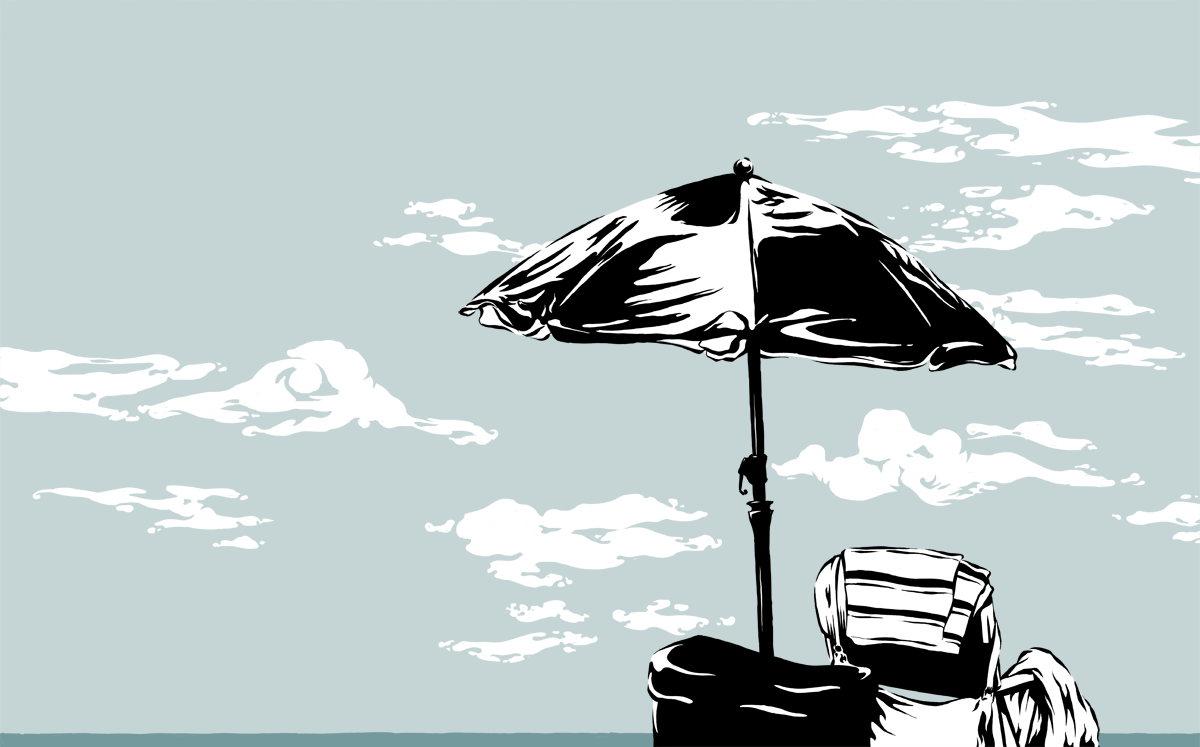
Illustration by Kenan
What interests you in comics?I am really into the marriage of form and function, and book as an object. Right now there are so many cheaper and more efficient ways to distribute content than on paper. You don’t have to kill a tree. If you are going to do that, it should be for a reason.
I was working as a receptionist and the cool thing about that is that I had all these office supplies. One of the things I realized is that you could fold a piece of paper four times and if you went back through it, you’d never be at the same spot twice. And I thought, “Oh, this would be such a cool way to tell a story.”
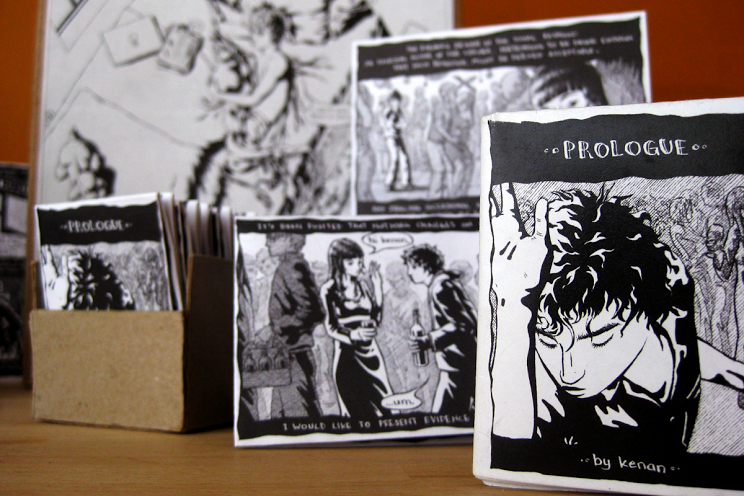
So I made comics using a single sheet of paper, and you read them in the order that they unfold. The folds are pretty intuitive because it is the same way that a book would open, either from the left or from the top.
What are you working on right now?
I’m working on the second issue of Last Train to Old Town. The first issue came out a year and a half ago. There is a web and print version of it. The book is handmade - I assembled, bound, and glued it. I made this object. And I love this about other people’s books. Their hands put together the object I am holding.
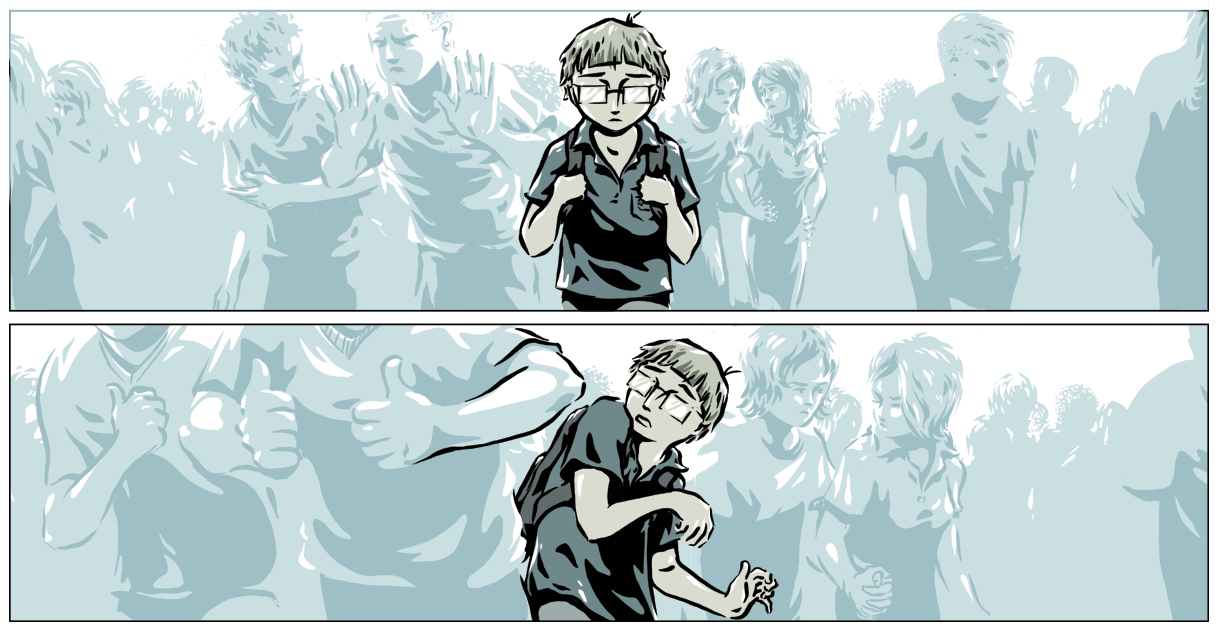
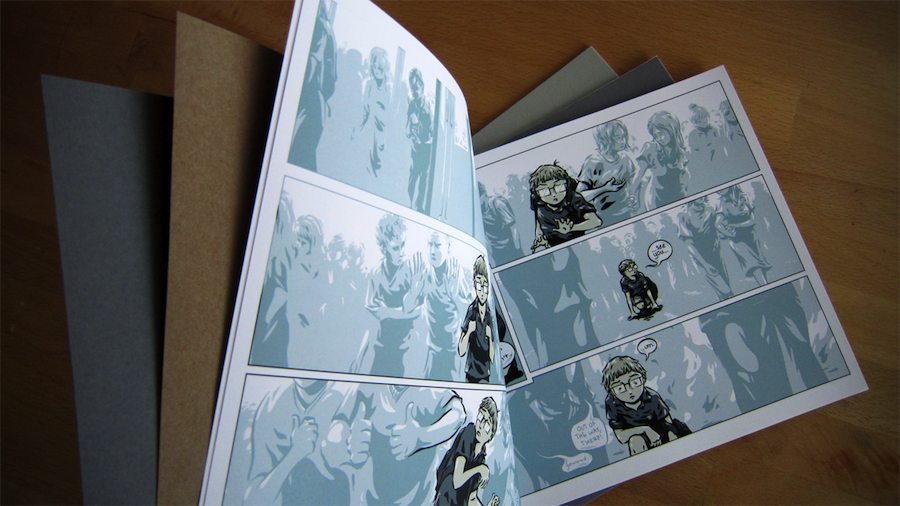
This comic has a leitmotif of color, so each setting has its own color scheme. The scenes change on page turn, so when you turn the page, you enter into a different color space. It has a sense of entering new spaces which the Web version doesn’t have. The Web version has other benefits - you can pull up the map, it allows for comments, and has author annotations.
What problems need to be solved in self-publishing?
The whole thing that is really amazing about the self-publishing world is that it’s really decentralized. You get these stories that are really idiosyncratic and personal in a way that never makes it through traditional publishing channels because besides making work better, editors also make it more palatable to a broader audience. In the self-publishing world, you get these immediate, really raw looks into people’s lives.
One of the problems with that decentralization is that it is really hard for the audience to actually find stuff because we all have terrible websites. We are all using a hodgepodge of Etsy and PayPal buttons, and it is hard for people to buy stuff even if they are interested. So my friend and I are now working on launching a webstore that centralizes everything into one place.
One of my other projects is a website that does comic reviewing and has a calendar of festivals and other stuff. There is lots of great writing about comics in the world, but they are all on these terrible websites that are hard for people to use. If you care about the information enough, you suffer through the difficulty of it. But I thought, “Hey, I do this for a living. I could make a good platform that made it easier for people to read and write and communicate about this stuff.”
Here is my lowest tech solution to another problem - in the comics community, there is this big culture of trading comics with other artists. Yes, you get a comic and you get a reader, but the bigger thing is that you solidify a relationship. I have these friends that I see only a few times a year, but the reason I feel so close to them is that I read their comics. But not everybody wants to trade. When you meet someone, you are never sure if you should ask that person to trade. So my friend and I decided to start wearing these little buttons that say, "I am happy to trade with you." We just started handing them out at shows. We will see if it catches on!
What do you do for a living?
I have my own little web design business. It is called Boy Blue & Co. and it’s from the nursery rhyme, Little Boy Blue.
Little Boy Blue,
Come blow your horn,
The sheep's in the meadow,
The cow's in the corn;
Where is that boy
Who looks after the sheep?
Under the haystack
Fast asleep.
Will you wake him?
Oh no, not I,
For if I do
He will surely cry.
What music do you listen to when you make art?
I find that the music I listen to influences the final product a lot, especially if I am drawing. So I actually pretty carefully curate the music that I am listening to when working on a given project, and it has to be emotionally correct for that. Right around the time I was working on the first issue of the Last Train to Old Town that Of Monsters And Men album came out and that was perfect because it was the right combination of quiet and introspective and adventure time fun.
What is your theme song or entrance music?
James Tyler or Simon and Garfunkel. It probably is The Only Living Boy In New York.
Who do you look up to & draw inspiration from?
Jim Henson is a huge influence on me. He would create these complete worlds and they would have their own logic to them, and it wasn’t just that he imagined this, but he built them. The Making of Labyrinth documentary is one of the most inspiring things I have seen in my entire life because there was no computer animation. Anything that they wanted to do, they had to figure out how they would actually make it.
There is something really gratifying about seeing not just the finished work of art but the process and limitations that movies struggles under… You never watch The Dark Crystal and think, “I wish this looked more realistic.” It doesn’t matter. Part of the joy of it is seeing the process. That is why I chose pixel-based programs as opposed to vector-based programs. I think that we all have this tendency to clean up our final product too much, but we read art because we want to remotely connect with other humans and seeing some of the imperfection allows you to do that.
I think that we all have this tendency to clean up our final product too much, but we read art because we want to remotely connect with other humans and seeing some of the imperfection allows you to do that.
Honestly, my biggest influences are other people who are not super famous, working in my field who just kick my ass. Eleanor Davis is one of the best cartoonist alive and she is younger than me and does illustrations for The New York Times. She has a book that just came out called How to Be Happy. Her comics are hand-cutout, with folding cover... beautiful. Every time I read her comics I am like, “Ugh, I gotta up my game. This is so good.” Seeing what people with no more money than I have, no more connections than I have can kick my ass - that is the most inspiring thing for me.
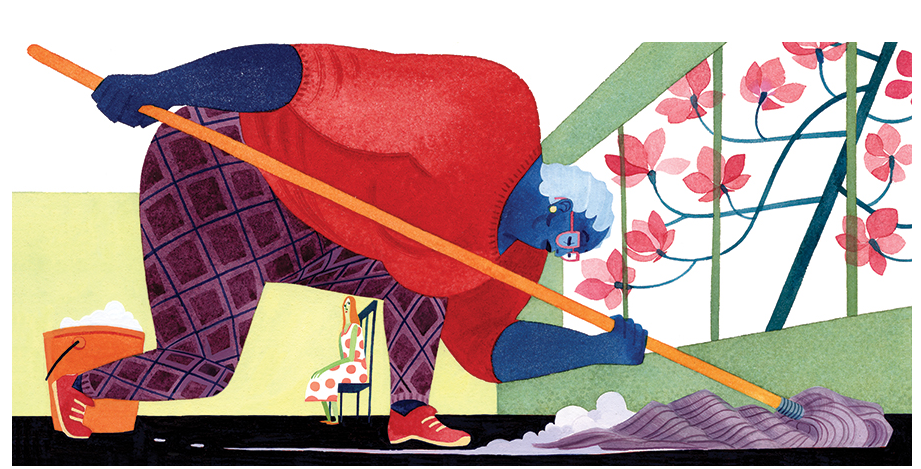
Illustration by Eleanor Davis
What is the most creative time of day for you?
Right around sundown, when my partner gets home, when it is time to make dinner, and very often I am up all night. In the middle of the night is when I feel charged with ideas and working, which is pretty problematic because I am tired all the time and I have trouble sleeping.
Give some advice to your younger self.
I’d say, “Hey, younger self, you are going to make crappy things, and that is okay. You will get better. Not everything has to be a masterpiece. It is better to make something and have it exist and have it be imperfect than have something be perfect theoretically and not actually exist.”