
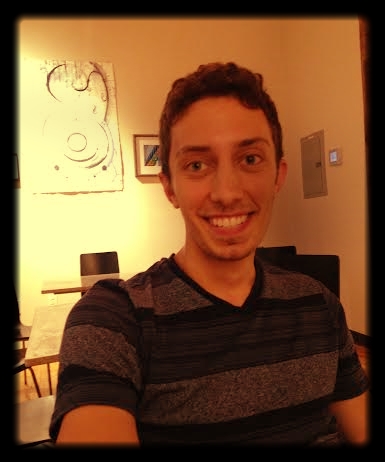
Alex Tooke is a Sensor Systems Engineer at MITRE who works on radar and collision avoidance and plays the piano in his free time. Learn how he got interested in science and what draws him to music.
 Why are you a science person?
I like math, and I like physics. Originally, I was going to do astronomy or astrophysics in college. I didn't know what engineering was, but I ended up on an engineering floor and was like, "Man, this is all stuff that I like...amplifiers and computers, and you can also do space stuff! Why wouldn't I do this?" And then I did that.
How did your interest in science first emerge?
I read space books when I was five. Space is really nifty. I remember talking with my grandfather about space because he was a big nerd, too. He was in mechanical engineering.
It's hard to know whether you are naturally drawn to something or whether it's shown to you by family when you are really young.

It's hard to know whether you are naturally drawn to something or whether it's shown to you by family when you are really young.
And I remember we first learned about science in second grade and I already knew everything they were saying. We were supposed to write down facts about stuff, and I wrote down a whole page, and the teacher was like, "What the hell?"
Do you still read about space?
Yeah, occasionally I'd read something. Actually, I like those popular science books by Stephen Hawking and those guys. I continuously read something like that maybe once or twice a year. The last one I read, maybe three months ago, was about the history of astrophysics in the 20th century. I'm surprised how recent pretty much all that stuff is. We didn't know anything about space in the 1920s, or the 1930s, or the 1940s. And we finally started figuring stuff out in the 50s, 60s, and 70s...and still.
What do you do for a living?
Now I work on radar and collision detection and avoidance research.
As an example, the airforce says, "We want this radar that does this." So a bunch of contractors like Lockheed Martin and Boeing put out a proposal that says, "We will build a thing that does this. Pay us this much." And this goes through my company that does fact-checking with analysis to make sure that what they are doing is legitimate.
Due to the fact that my company is not-for-profit, much of the overhead pay is put into internal research initiatives. So that is where the money for my research comes from. Every year people are asked to come up with ideas and they make proposals for their ideas. That is how the work that I do gets paid for.
What are the current projects you are working on?
The first thing that I work on, half or more of my time, is experimental bistatic radar. It started five years ago and went through a bunch of different stages, and now it is at the point where we are doing a passive version, which basically listens to stuff (e.g. boats, aircrafts) that is out there and uses a receiver and figures out where stuff is based on reflections.
The other thing I do there is collision detection and avoidance, and researching into ways to do that effectively. A potential application is for unmanned aircrafts because they have to be able to avoid stuff that is in their way that is noncooperative, as in people flying around in their personal planes. They won't have a radar or anything on them, so they are just flying based on eyesight. So the unmanned aircrafts can sense it and can automatically veer away.
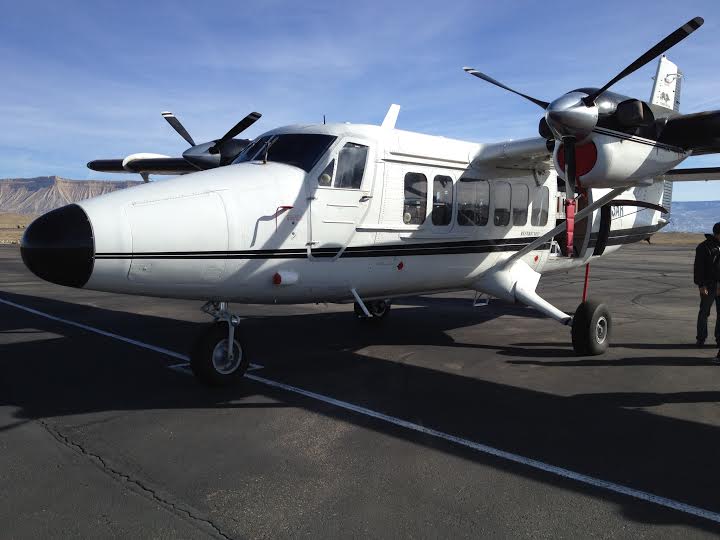
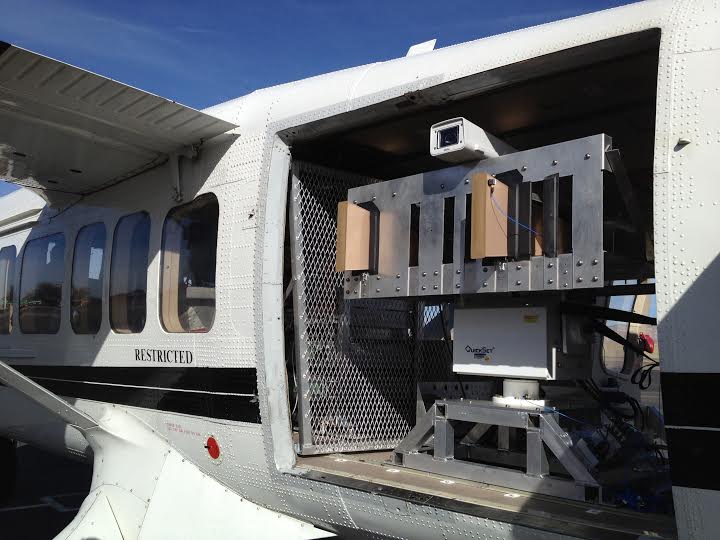
Photo credit: Alex Tooke
What tools do you use to code in?
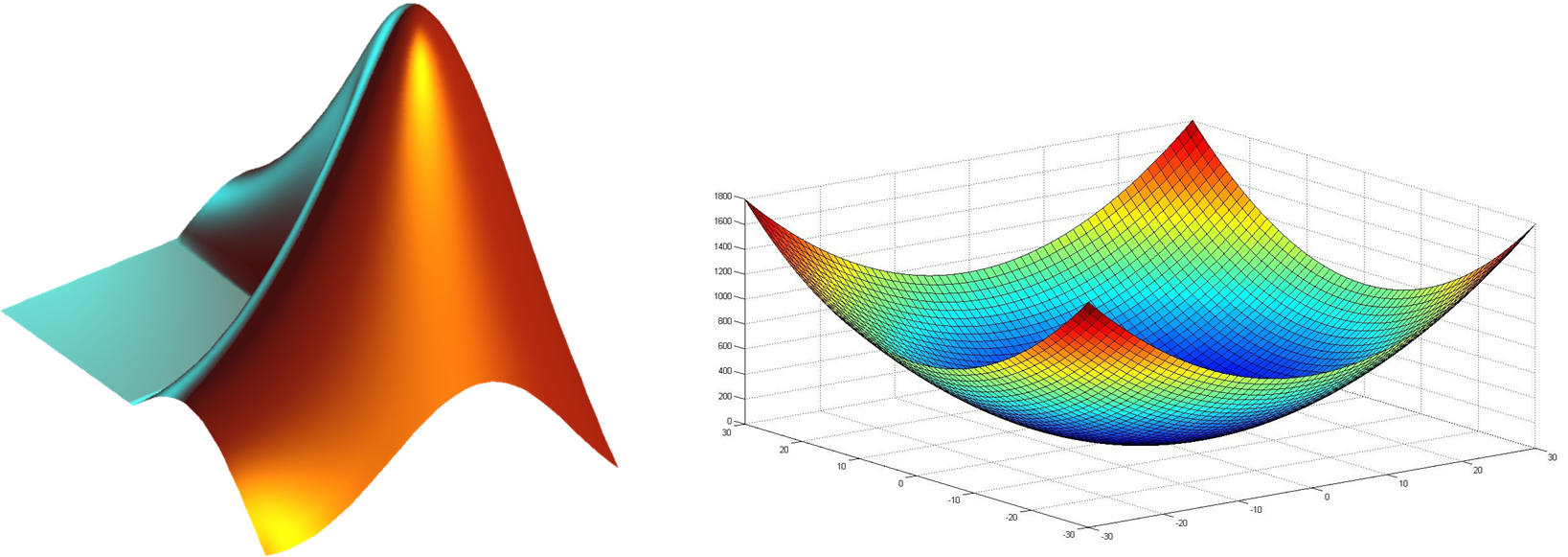
Many people who work on science use MATLAB, if they are doing computing stuff. Also, Python or Mathematica.
What music do you listen to when you work?
It depends on my mood. I go through phases of classical piano - that is what I like to play now. I like metal a lot. Old progressive rock. ABBA is pretty good. Judas Priest, 80s metal.
So you play the piano. How did you get into that?
I took music theory in college, the first two basic levels. And then, I didn't really start until a year ago. It's so fun. It's the best thing ever. Such a great way to spend time. On average, I spend two hours a day on it.
The first thing I do is I play all the scales for four octaves. Most people who play the piano were forced to do it and think, "Scales are boring and stupid. They suck." But they are really not boring and stupid. And they appear all across music, so they are really fun to practice. And you can practice them as loud as possible, or as fast as possible, or slow and even.
How do you find two hours a day to play the piano?
I think I just don't cook.
What do you eat then?
Well, I used to eat a lot of Anna's Taqueria. But then I stopped doing that because it got expensive to eat that daily. I make smoothies that have vegetables, fruit, and yogurt - and that is a great fast way to not actually eat. I drank two of those today. Two half liters, and that has been my entire food for the day.
You take classes at Boston University. What are they about?
I take classes there in the spring and the fall. I took stochastic processes and using probability and signal processing to model things like wired and wireless communication channels, and basically every topic in EE. Last semester I took Information Theory which was invented in the 40s by a young gentleman called Claude Shannon. He pretty much single-handedly invented the mathematics and techniques used to design every communication system, including basically your computers and internal communications. It was his Master's Thesis, actually. So that is pretty amazing.
The classes are towards a Master's in electrical engineering, but they also help with understanding stuff at work. And also they are really interesting.
What time of day are you most productive?
Depending on the day, any time. When I do school work, I set a hard limit of 9pm.
What problem do you think we should be tackling next?
First of all, NASA doesn't get money any more. They should probably have a lot more money. This is half of what gets younger people to do science.
Also, nuclear power hasn't really advanced all that much.
How do you define success?
Everyone needs to have something that they are passionate about and as long as they spend time on that, they are fine.
Everyone needs to have something that they are passionate about and as long as they spend time on that, they are fine.
If starting tomorrow you can no longer do electrical engineering, what else would you do?
Music. Piano.
What is your entrance song or theme song?
The first band that came to my mind is Judas Priest. They do one sweet song called "Breaking the Law." It's a hilarious song. It will be so funny to have this as an entrance song because obviously I am not breaking the law.
Give some advice to your younger self.
I'd probably tell myself to relax. Don't play so many video games and do other stuff instead.